
What a Performance
The first half of the week was business as usual, lesson planning, lessons, chats in the staff room, chats with villagers on the way to school, more chats with them on the way home, more power cuts...things I've already mentioned at length in previous posts.
However, on Thursday J, the kind person who lent me his car at the beginning of May, arranged a research visit for me to a primary school nearby.
The novel I'm aiming to write whilst I'm here will feature a child with albinism (there is a high prevalence of this genetic condition in East Africa, and in Malawi it's estimated that around 1 in 130 people have albinism). I've already been introduced to some families affected around the area where I'll be staying in August and September, but to have an opportunity to visit a group of school children was something I couldn't turn down.
Fortuitously, Thursday was a closure day for the school I'm teaching at, as preparations were being made for the following day which was graduation day, a celebration for the Form 4 students before they take their exams (more of that later). J had arranged to drive me into town to the school and introduce me to the Coordinator of the unit that supports learners with albinism. Madam C hitched a lift (it was she who introduced me to J), as she needed to get certificate printed for the graduation day and so we all arrived at the primary school just after nine. J needed to get back to his own duties and I suggested that Madam C should also go and tick the errands off her list, but luckily she stayed with me. I say luckily, because when the ten students were brought to meet me they were incredibly shy and had very limited English, so Madam C's presence was invaluable, acting as interpreter and general child whisperer!
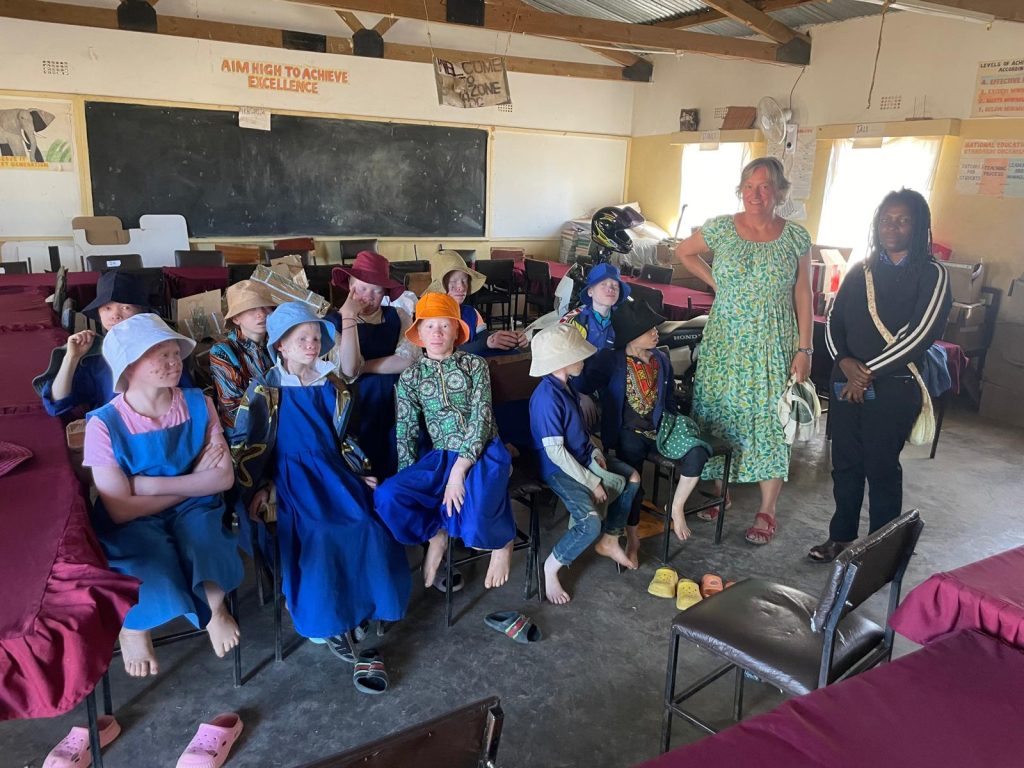
I wanted to understand how life is for them, at school and in their community.We talked about how difficult it can be for them to get the things they need, such as clothing to cover up and sun lotion, which is expensive and hard to source in Malawi. They also talked about the name-calling they suffer. They are often referred to as 'money', alluding to the fact that there is a cultural belief that they can be sold...I won't dwell on that too much for now, but there have been some horrific historical cases of people with albinism being murdered for their organs, which are believed by some to be lucky. The children also told us how much it hurt their feelings when they are called names (they also mentioned being called 'soya', and 'cassava flour').
I told them (via Madam Translator) that I was writing a story that would include a child with albinism and wanted to know what they thought it would be important to include. They were reticent to start with. What should this character be like? I asked. They'd be brave, they said, independent, respectful (although a couple of the boys said my character should fight anyone who insulted them...). Their friends would also have albinism because they would help and understand each other, they said. They would be so strong that people would fear them. It was quite tough to listen to their answers, but insightful.
We asked what they wanted to be when they grew up. Out of the ten of them, there were 5 who wanted to be nurses, one a lawyer, two wanted to be soldiers, one a journalist, and one a police officer. There are now role models in the public eye here in Malawi; people with albinism in successful careers, and the country's Inclusive Education Policy reviews give hope for things improving.
Going back to stories, I asked them what sort of story they would like to write about someone with albinism. A story that shows we shouldn't be cruel to each other, one said. No violence, said one of the girls, and the person would have friends who really love them. A story that shows that we are all equal, another child said.
I couldn't have put it better myself.
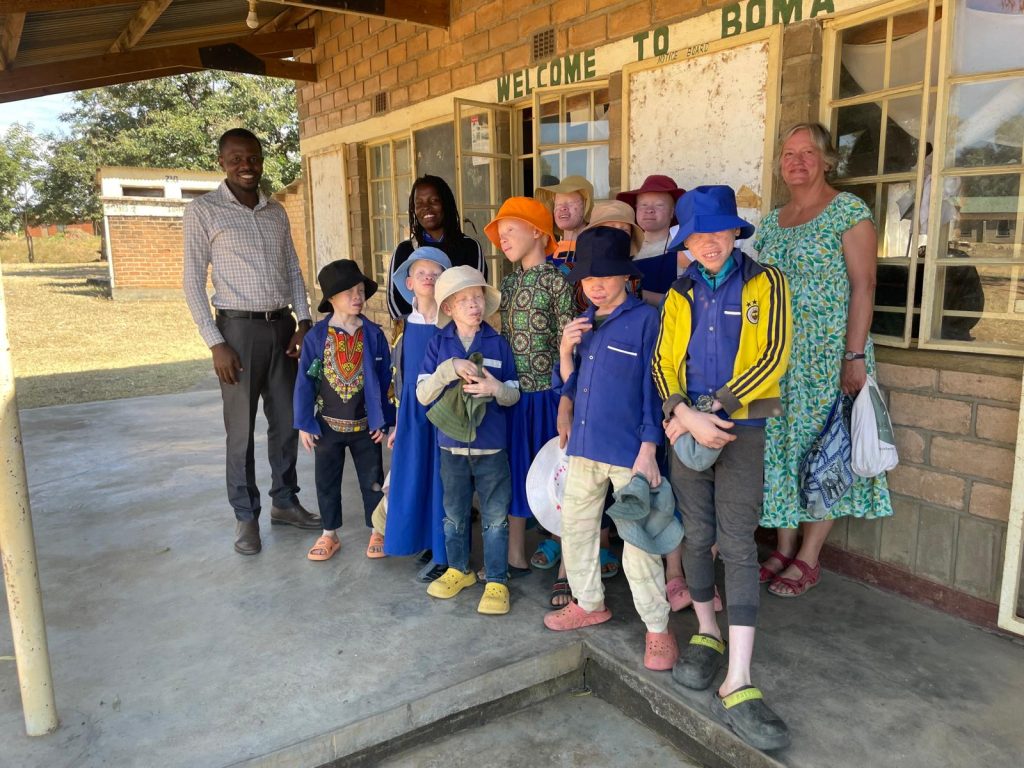
One of the boys, who had been very shy at the beginning, was proving to be a real character as he began to come out of his shell. We established that he liked to dance, so I asked if he'd show us some of his dance moves and boy, did he deliver! He requested a song and we spent a happy few minutes outside as little A entertained us with his performance, the other children either encouraging him or singing along to the tinny tune coming from a mobile phone speaker!
Madam C and I left enlightened and with a promise to return later with two hats that I would buy at the market in town (the school has advised that they had eight learners with albinism there, so I'd taken eight hats...so unfortunately, I was short by two and that had to be rectified). I had also taken some sun lotion, kindly donated by some lovely folk in the UK, that I had brought with me in April.
Finding appropriate hats in town proved to be a challenge, as did getting student certificates printed (half the town has no power), another printing shop had printer issues and then, several hours and several km of walking later, the printing shop that had promised to provide them (and kept Madam C waiting for a LONG time), failed to deliver. Once again, J came to the rescue - not all heroes wear capes - and arranged to get the printing done elsewhere by the next morning. Appropriate hats for the school finally sourced, we delivered them on the way back and arrived home shortly before sunset.
I was tired, but still had a speech to write...
Guest of Honour
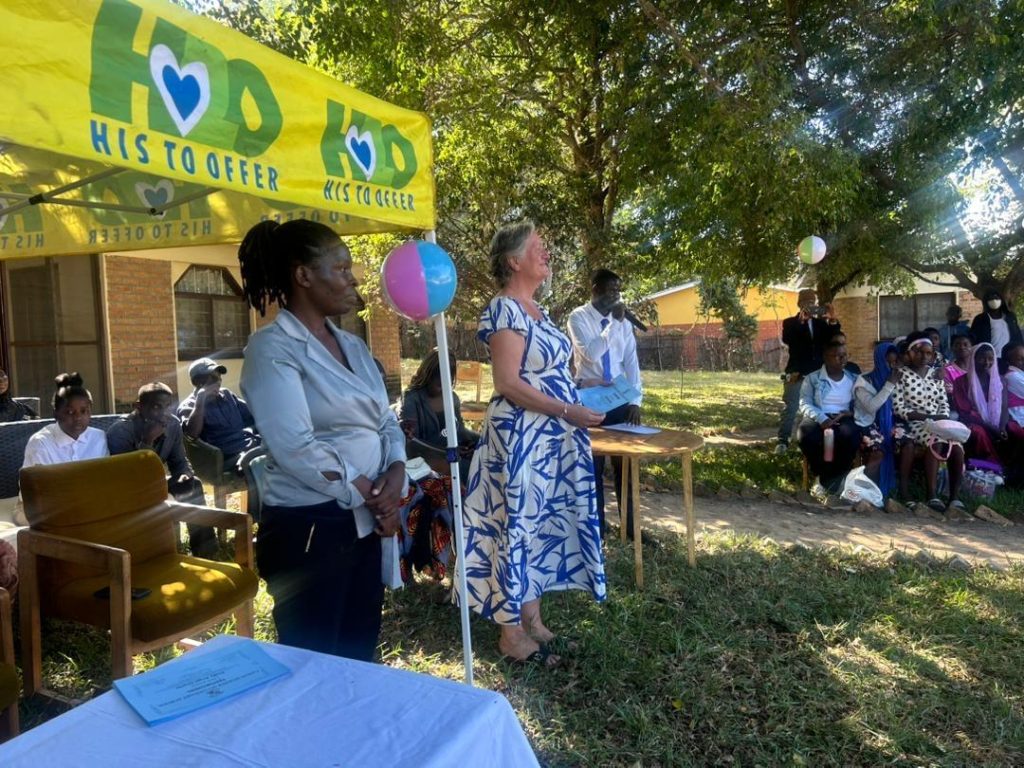
Two days before graduation day, I was asked if I would be Guest of Honour at the ceremony. Not entirely understanding what the role would involve I, of course, delightedly accepted. It was later mentioned that as well as presenting each student with his or her certificate, I would need to deliver a key-note speech at the event - and public speaking is not a favourite activity of mine. So, late into Thursday evening I was scribbling, crossing out, scribbling again, tutting, sighing and forgetting to breathe at times. There was power that evening, so I couldn't even use that excuse the next day.
The graduation ceremony takes place before the exams. This is because immediately after the exams students go home and many of the boarders live a considerable distance away. It's an important event; the certificate they are awarded confirms their attendance at school and they may need that for future employment.
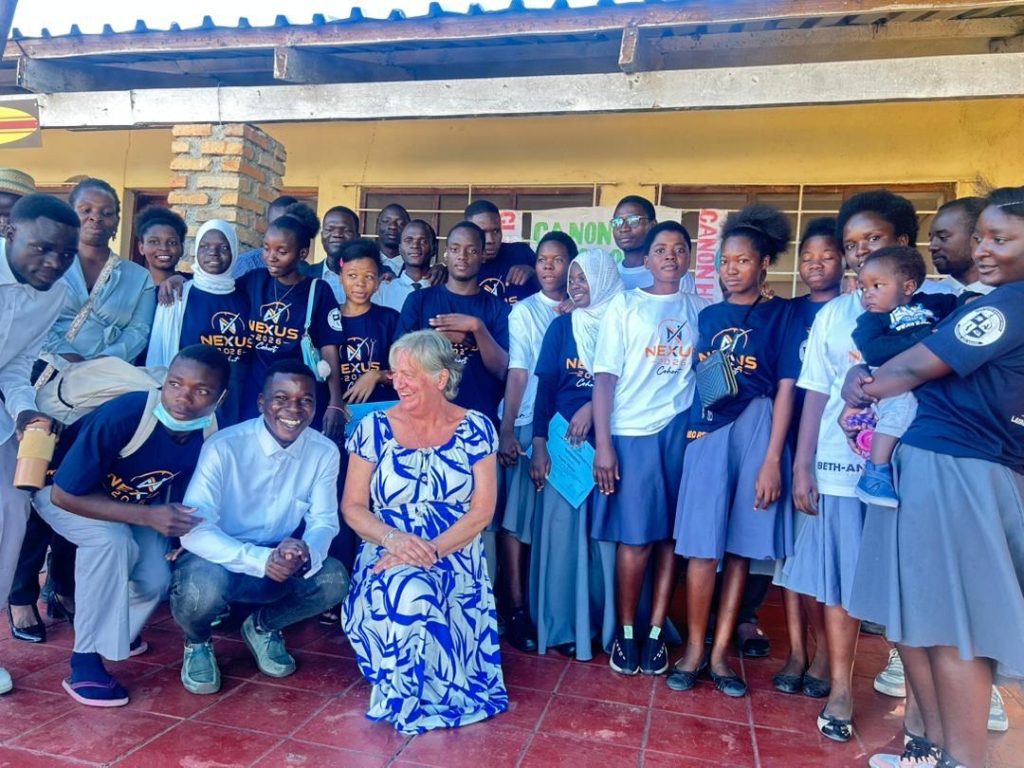
There were some organisational hiccups first thing but the ceremony, held at a nearby lodge in a beautiful spot by the lake, got under way around midday. I said in my speech that despite being the G of H, it was my honour to be there - and I truly meant that. There were interludes of drama performances from the students, dancing, singing, a poem written by one of them about their time at Canon Hunter, some proud, excited and ululating parents. Each student danced up to accept their awards, sometimes joined by a parent, sibling, or a couple of friends. It was simply delightful. There was food (much of it prepared by one of the teachers) and photos and fun. Fabulous. A proud day for all and an experience I won't ever forget. I'm not sure I stopped smiling the whole day, apart from when I nervously delivered my speech!
Blogging Off
That's enough excitement for me for one week, I think. The research has spurred me on to get writing though, so I'll be aiming to really get started on it this week.
Another blog post next weekend, but in the meantime please follow me on Instagram, @malawi_enjoying_ourselves.
Thanks for reading.
Clare
Oh my word, this got me right in the feels....the person would have friends who really love them. A story that shows that we are all equal, another child said.....after all, it's no different to what we all want. I can't wait to read your new book.
Chatting with those students was a very moving experience. I think my research in Mangochi is going to be emotional!
How wonderful and somehow humbling x🪄