Why Can't I Follow My Own Advice?
For almost three years, I've been telling people to 'just write'; put pen to paper, put fingers to keyboard, stop procrastinating and get on with it. So, why am I finding that such a hard task? At home, I crave opportunities to sit down and immerse myself in a warm bath of imagination, to luxuriate in language and nurture my creativity. This week, even having given myself several kicks up the backside, progress is painfully slow and the daily goals I've set have fallen dismally short. I can, in part, blame issues with technology (my iPhone is behaving badly, my Chromebook - new to me for this trip - is sometimes difficult to navigate for a technophobe like me) but let's face it, there is always the old school pen and notebook approach, so who am I kidding? .
Let's hope I can at least get a couple of chapters under my belt by the end of this coming week.
Sad Times
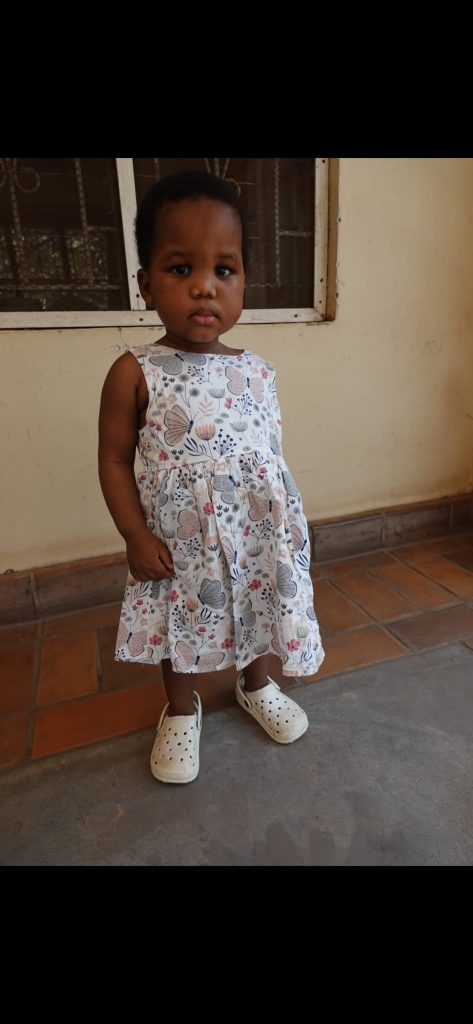
On Tuesday, I was due to visit F, the manager of Open Arms, in Mangochi. Early that morning, I received a message from F, postponing our meeting as he needed to attend the funeral of one of the children who had lived at the Open Arms home before they were all placed with extended family out in the community last autumn. He had received the tragic news that Shamira, who was just two years old, had died the previous day. I had met Shamira, a dear little soul, when I visited the children's home with my friend Phill last September. Her death, which occurred after a very short illness, is a stark reminder of how fragile life can be here. F would have felt her loss keenly - I witnessed on my previous visits how he loved the children like they were his own.
Rewarding Research
On Wednesday, my hosts kindly let me use their car to drive to Mangochi, where I had arranged to meet three families who have children with albinism. I've mentioned before that the book I'm writing (or currently NOT writing) will feature a couple of child characters with albinism (originally it was going to be one character, but will now be two, thanks to input from some of the children I've met here) because I want to explore some of the challenges faced by the albino community in Malawi.
Albinism (a non-contagious, genetically inherited condition present at birth involving a lack of melanin pigmentation in the skin, hair, and eyes) is more prevalent here in East Africa than the rest of the world. In the 2018 census in Malawi, it was estimated that one in 1300 people have the condition, in contrast to the estimated one in 17000 people in Europe. The struggles for Malawians born with albinism are manyfold:
- Violence and human rights violations. Since 2014, over 170 ritual-based attacks, abductions, murders, and grave robberies have been documented due to false beliefs that body parts bring wealth and good fortune.
- Becoming social outcasts. Despite attempts to educate communities, there are still long-held suspicions and beliefs around the subject of albinism. For example, in some areas, women of child-bearing age believe that if they pass a child with albinism in the street, unless they spit at them, they too will be 'cursed' with bearing an albino child.
- Health. A profound lack of melanin leaves individuals highly vulnerable to severe UV damage and skin cancers and preventative items like sunscreen and protective clothing, are scarce and expensive. Most people affected will rely heavily on donations of high SPF creams and hats from overseas visitors. The larger hospitals have specialised clinics for dermatology and eye care but for people living in rural areas the cost and complications of transport can be prohibitive to accessing these services.
- Education. Low vision, classroom bullying and social stigma invariably leads to high school dropout rates for children with albinism. More on this later.
- Employment. Workplace discrimination is high and opportunities are limited because of the need to find work that involves minimal sun exposure.
The above makes for depressing reading and I'm sure mirrors the challenges faced by many marginalised groups. However, although I've heard and read many heart-breaking stories, the people with albinism I've met here have been inspiring in their resilience and determination. Like anyone, they just want to be heard, to be seen, and to have the opportunity to reach their potential. They have shared their their dreams with me and talked about the barriers they need to overcome.
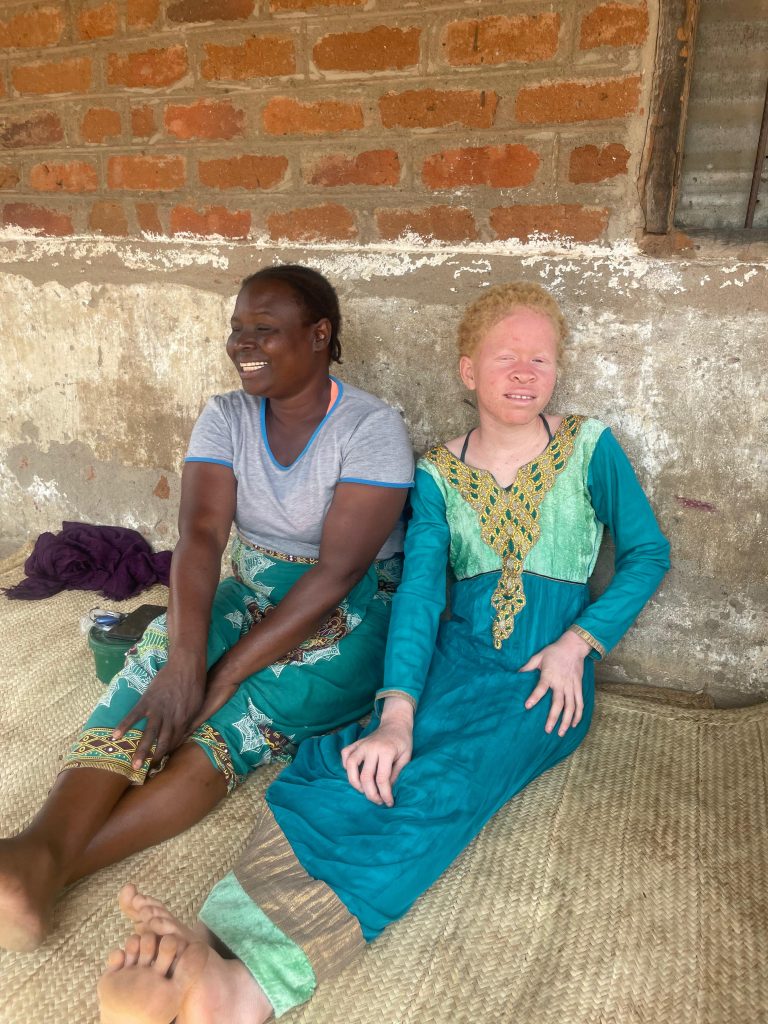
In September, H will start the final year of primary school and knows that the transition to secondary school next year could be difficult. At her school, she is the only child with albinism, but she feels accepted and has many friends there. However, she worries that people in the community gossip about her and is often teased. The police have issued her with a safety alarm to use when she is out and about (I later discovered that all the people I met had been given one, with varying degrees of success). H dreams of becoming a nurse, partly inspired by a male nurse she sees at the specialist clinic at Mangochi District Hospital.
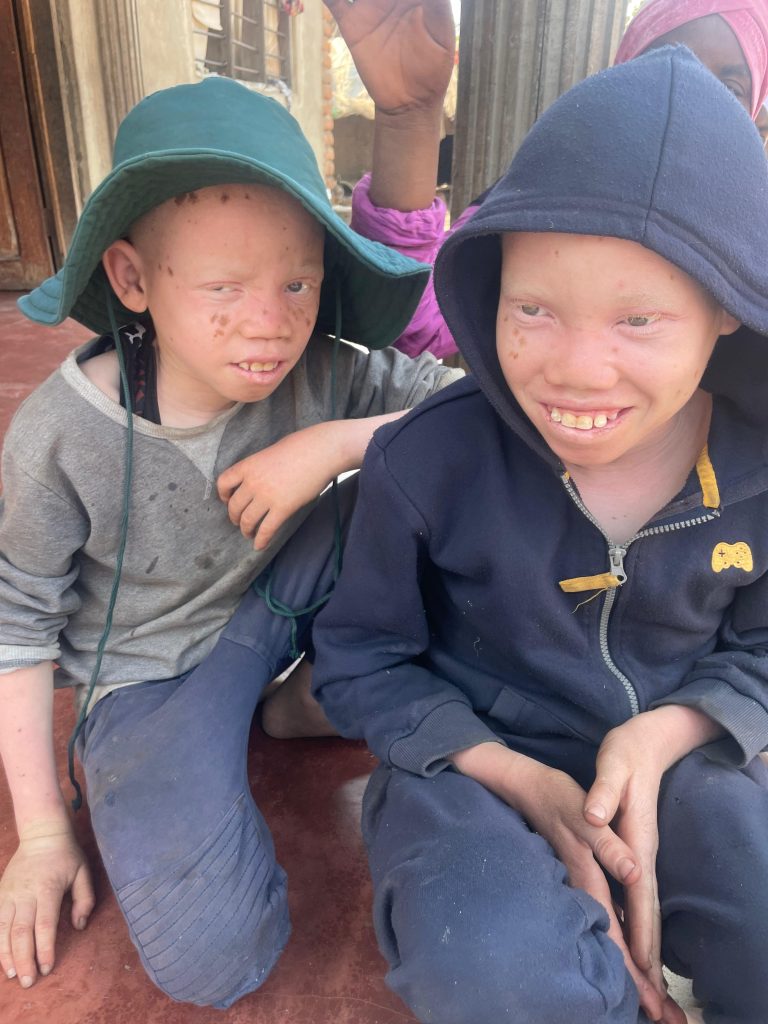
In the next family I visited, there are two sons with albinism. Their father died two years ago, so life is a struggle for them and their mother. A is 11, in standard 6. His favourite subject is English. U is nine, is in Standard 3 and likes Maths. Both boys dream of being teachers.
There is a government led school close to their home, but with its class sizes being so large, their mother worries for their safety. Instead, they travel to a Muslim faith school, about a twenty minute bike ride away, where the class sizes are smaller and they are well protected. When their father was alive, he used to accompany them on their bikes to make sure they got to school safely. Now they have to go alone. Like H, they were given alarms by the police for protection, but the batteries have run out and there is no money to buy new ones. That's a quick fix for next time I visit.
In the final family I visited, four of the seven children were born with albinism. The eldest of the four is 26 and has struggled to find employment. He was away from the village on Wednesday, so unfortunately I didn't get to meet him. The youngest son, who is seven years old, was also away from the home that day, as he was being circumcised. Poor kid. However, I managed to have a good chat with two of them.
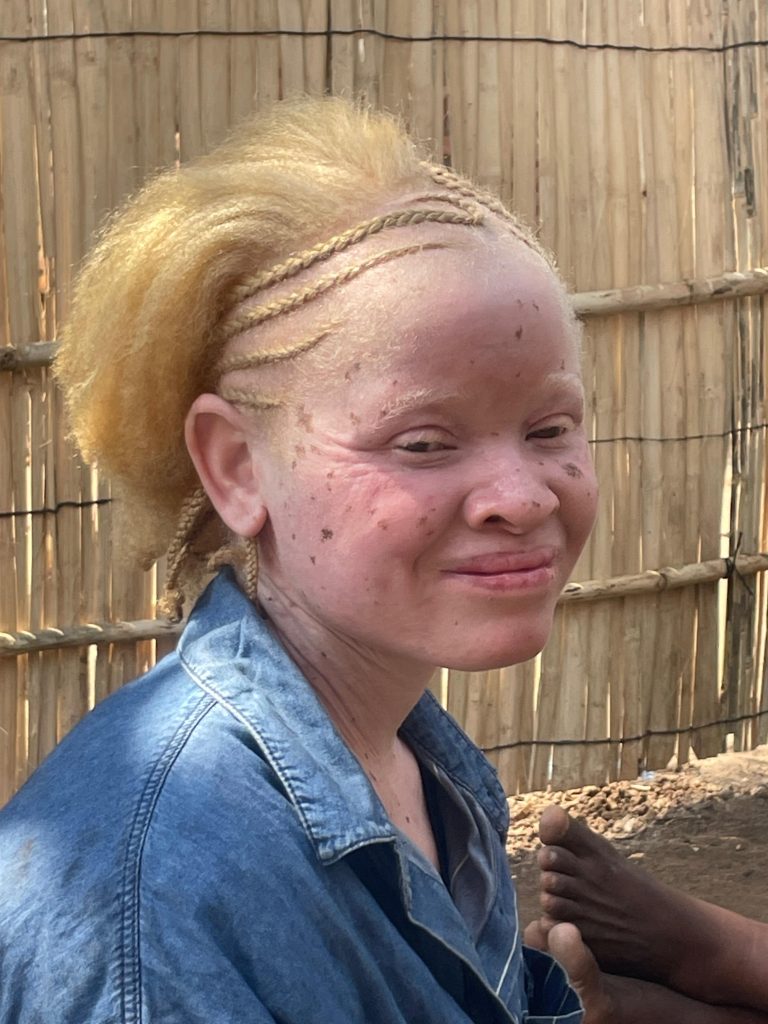
At 23, A is married and has a two-year-old son (who doesn’t have albinism). Her husband works in the capital, Lilongwe, and sends home as much money as he can. A is clearly bright and feels cheated that she had to drop out of school before the end of primary school. She wasn’t able to keep up with the rest of the class because she couldn’t read the blackboard (as I know from my own experience of teaching here, most lessons are blackboard focused – assuming you can get hold of chalk). In desperation, she went to see the head teacher and explained the problem Left so despondent by his reply of ‘What do you expect me to do about it?’, she eventually dropped out of school after Standard 7 (the last but one year of primary). Now, she'd like to set up her own small business, perhaps selling vegetables in her village, but this will require some start up capital.
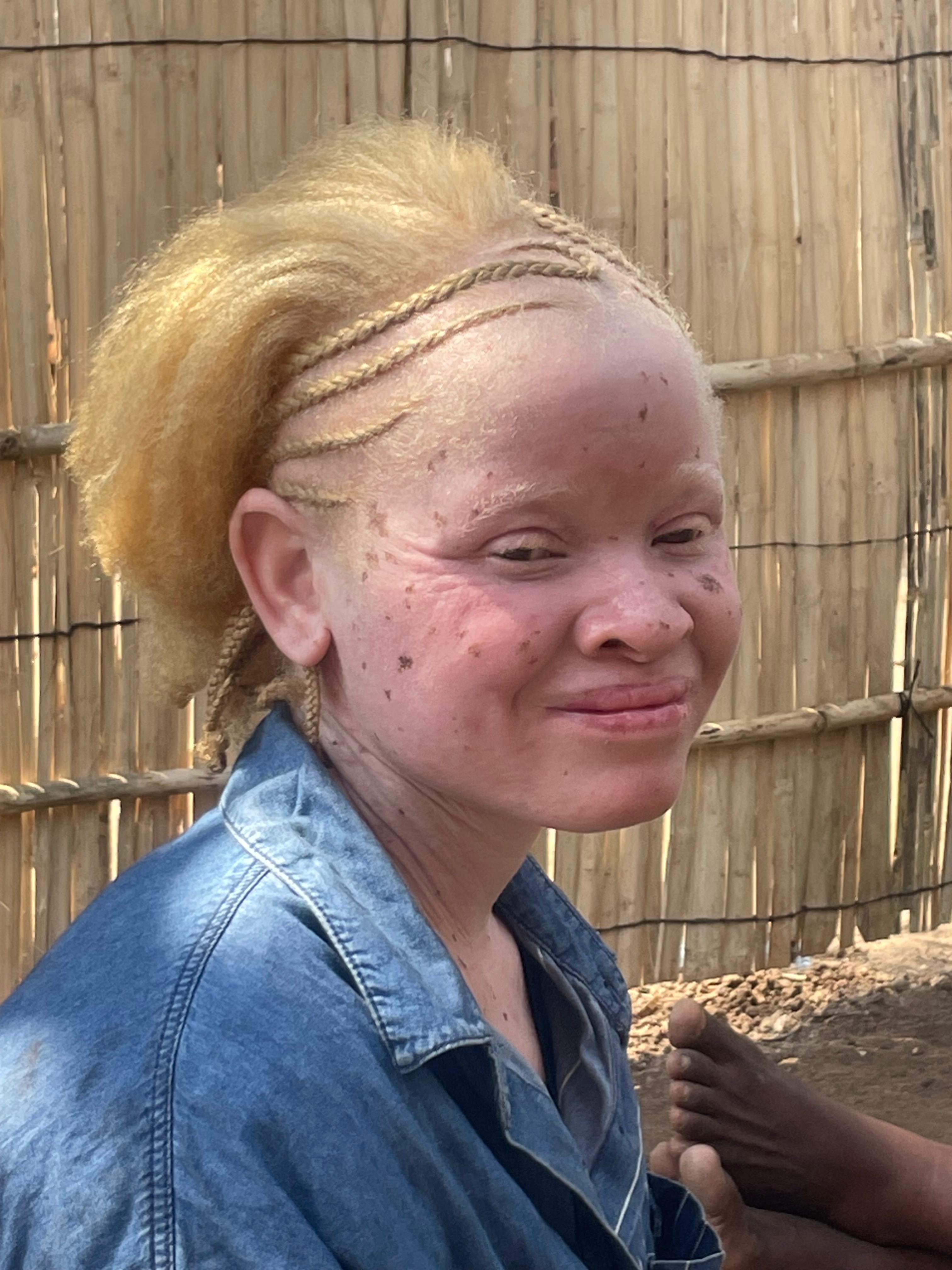
For the duration of her chat, A wore a black beanie hat but I could see some beautitul plaits peeping out from underneath. Eventually, I asked if I could see her hair - I'm so glad I asked as it was stunning!
The thought that her younger brothers may end up dropping out of school worries her, as their eyesight is also deteriorating, particularly Ab, who is 13 and in Standard 6 at primary school. His favourite subject is English and he dreams of being a bank manager.
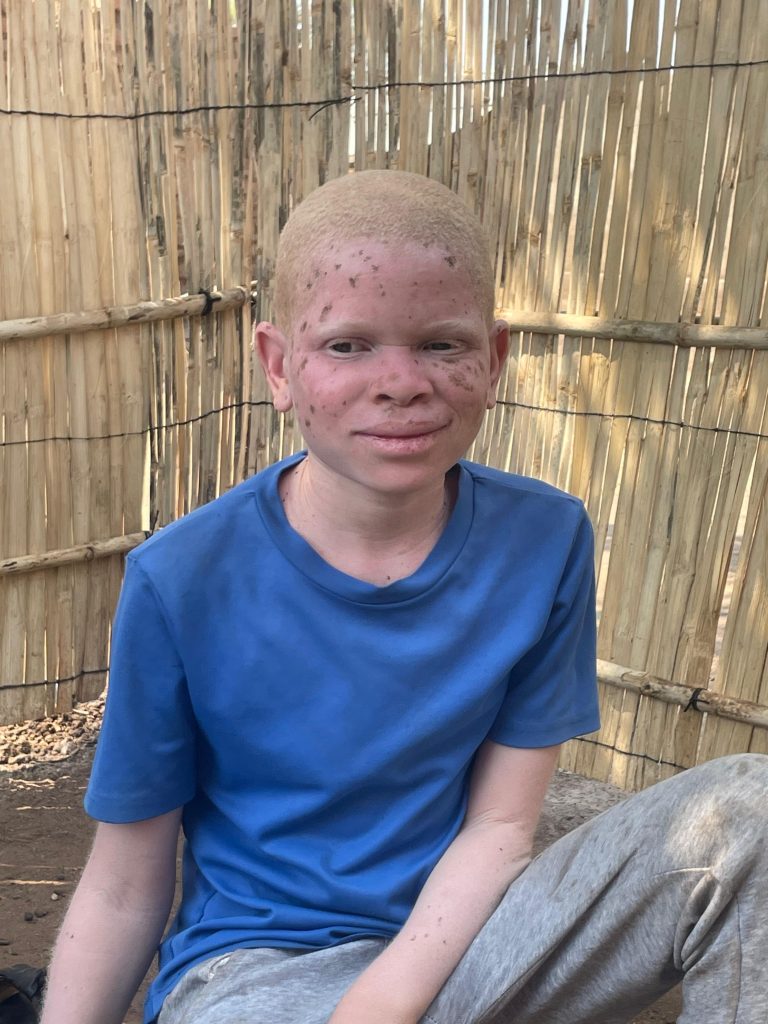
Much like when I visited the specialist unit at a school in Nkhotakota in June, I asked all the people I met on Monday whether they had ever read any stories that featured characters with albinism - each time, the question was met with a resounding 'no'. An idea is germinating...
One of the biggest things I took away from the day was the issue of poor eyesight affecting education outcomes. Later, I spoke at length with F, from Open Arms (who provides support for many of these families in his own time) and we have resolved to get all of the people I met to an eye clinic in Mangochi within the next couple of weeks. We've established that an eye test there will only cost around £4 per person and will determine the prescription of glasses needed for each of them. I can then arrange to have the correct specs made in the UK and ask my friend Phill to kindly bring them over when he comes to visit in October.
Bobbing Along
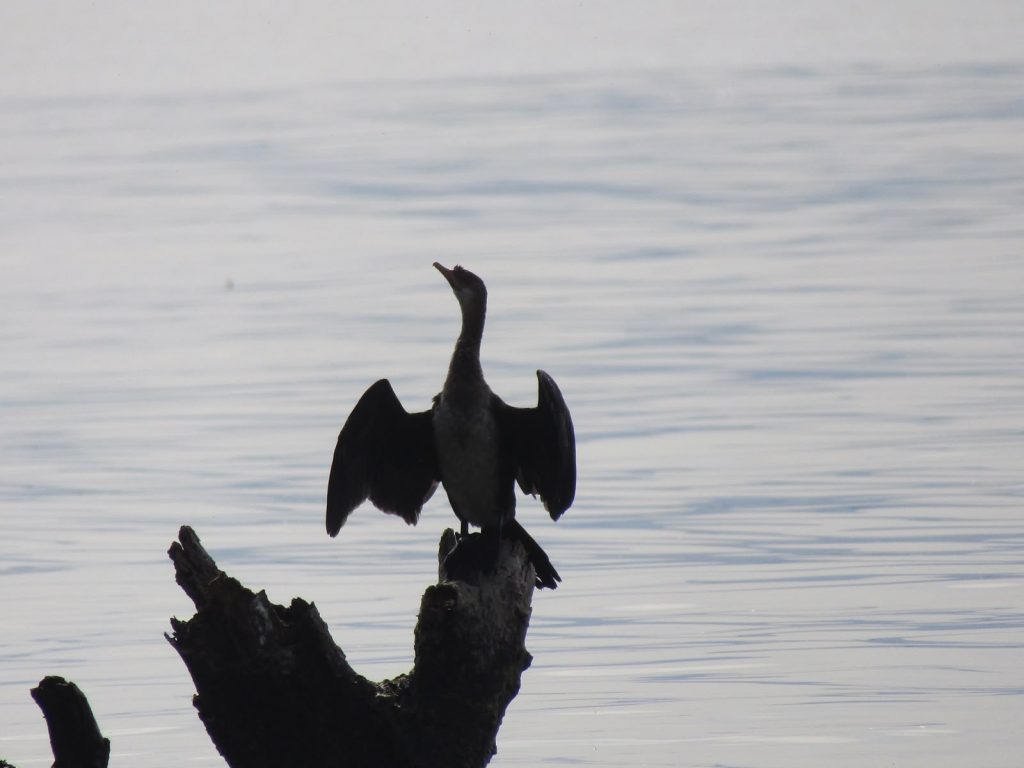
To further procrastinate from the task of novel writing, I've had a couple of tranquil session kayaking along the lake shore this week. Yesterday, I bobbed along on the gentle waves for a while, watching a group of hyraxes playing on the rocks above the bay whilst a fish eagle sat and observed me from high up in the trees. Being kind to myself, I could say that perhaps this is part of the writing process; that scene may appear in one of the chapters of the book. Who knows?
Blogging Off
Let's hope in my next blog I can report a prolific period of writing, and not a further problematic period of procrastination.
In the meantime, please follow me on Instagram @malawi_enjoying_ourselves.
Thanks for reading.
Clare
Fascinating insight. Thank you Clare… take care and keep shining an insight into this awful affliction ❤️🙏🪄
Thanks, Sarah! Hope all is well with you in sunny Southampton!
Really educational and informative, thank you for opening my eyes to this. Please let me know how I can support with eye tests/ glasses before P comes over X x